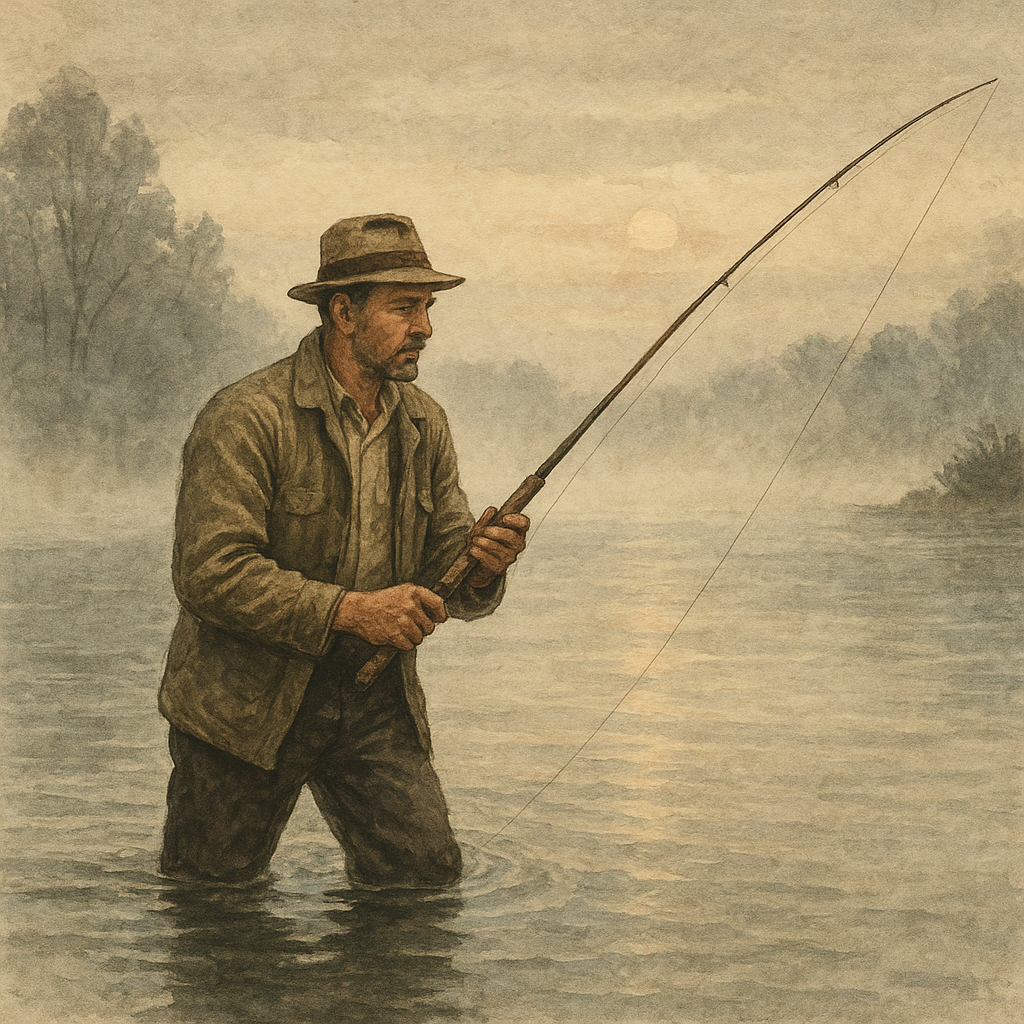
Cold Water, Quiet Runs: A Night in Oswego for Chinook and Steelhead
The road woke me with a rind of frost. I drove from Cape May Inlet through early dawn, six hours to Oswego. The lake breathed cold. The water wore its own weather: grey, patient, solid as a raw day in early spring. I came for chinook and steelhead. I came for the way a trout line feels when the wind sits on the water like a hard hand.
Oswego, New York, sits out on Lake Ontario like a finger bent toward the cold. The harbor was clean and quiet, boats tied with rope and patience. The river mouth carried a slow current. Steelhead staging in cold water move with the exact gravity of winter. Chinook roam the deeper lip, a slow, heavy promise just beyond the surge. I walked the break and listened to the line hiss as it cut the air.
The first bend yielded a pull that did not hurry. A steelhead thrashed near the seam, silver in the dim light, and then settled into the lake with a stubborn, rolling calm. I learned to feel the water before I felt the fish. The river’s patience told me what to do: make the cast, hold steady, stay out of the fish’s way. The rod bent like a question and the reel sang a steady, dull answer. It was not a riot. It was a weight that spoke softly, the measure of a season’s work.
The lake itself is a constant test. Cold water staging here means the fish do not sprint. They wait in the cool depths, then rise with a patient guilt that a fisherman comes to respect. I watched one chinook move in the long, measured arc of a drag line, the parabolic curve of a memory you can only learn by standing there in the quiet, listening to the current as it currents through your hands. You learn which readings matter: a line that mends cleanly, a sink tip that holds bottom, a wobble that hints at a strike. The steelhead came twice, once in a pale green current that could hide a thought, once in a heavier rush that shook the rod to its core. You fish not to conquer but to understand the place where water and life share a rhythm and a risk.
The drive out of Oswego toward the bigger coast line of Montauk Point will be long. The next coast is not merely a map’s edge; it is a statement. A man moves from the cold water staging of Lake Ontario to the salt-swept patience of Montauk’s chowder days, chasing a different memory. Yet today the lake kept a quiet book in my hand. I read it slowly, line to line, learn from the way the wind travels across the water. And I know there is a thread that runs from Oswego to Montauk, a thread of fish and fisherman and the road between.
I am not a hero here. I am a careful reader. I cast again because the water asks another sentence. I pause, I mend, I wait. The fish will come with the patience of a winter morning. The day ends not with a strike that shouts, but with a line that knows where to lie, and a man who learns when to listen.
Gear Used
- Orvis Clearwater Fly Rod 5wt — light casting for wary Chinook
- Lamson Liquid Fly Reel 5+ — smooth retrieve, steady drag
- RIO Gold Fly Line — long casts, clean mends
I learned to respect the simple tools. They do not make the river; they read it with you.
The road goes on, and so do the fish.