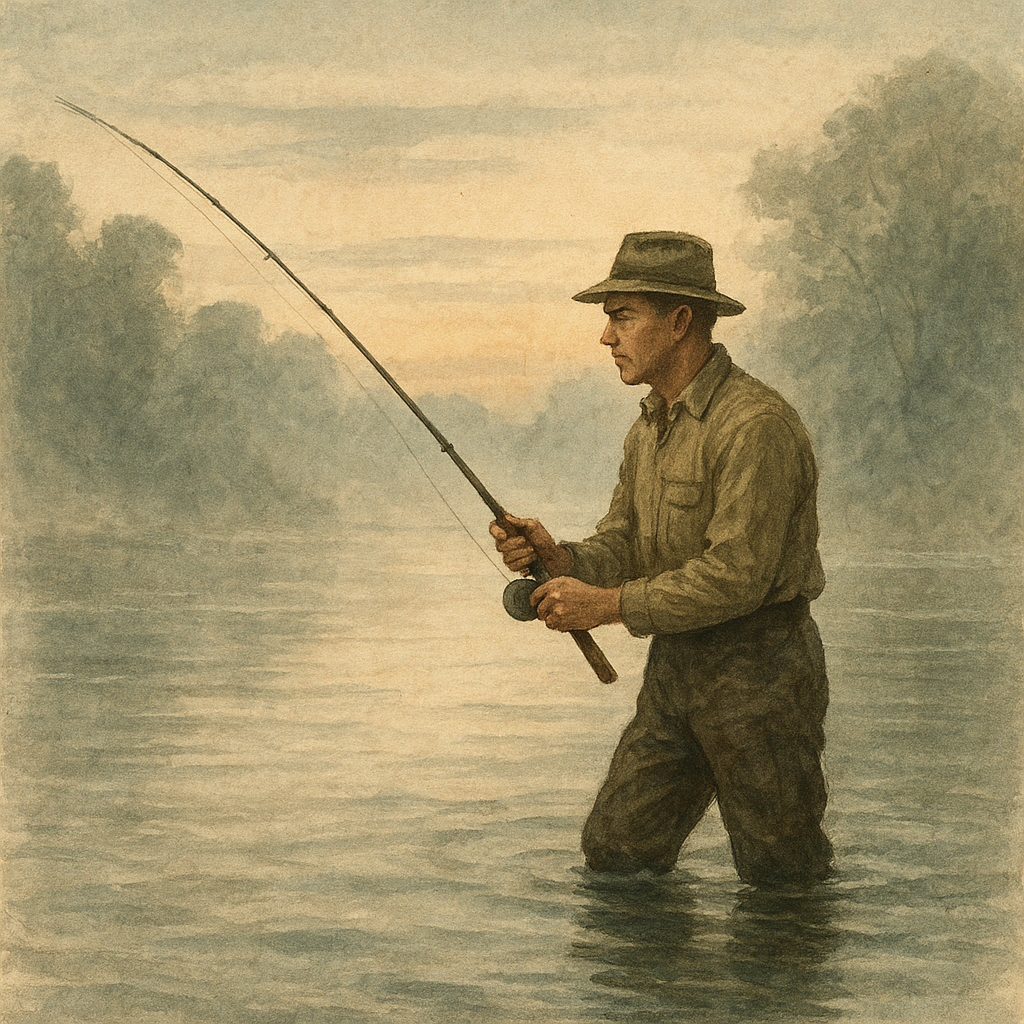
From Farmington River to Long Island Sound: Stripes and Blues by New Haven Harbor
The road took me from the Farmington River valley and its clean echoes to the salt edge of New Haven. The day was shoulder-high on the coast, a March breath in the wind. The water wore a dull, heavy green, the kind that still holds the lurch of winter in its ribs. I drove about an hour, the car’s tires tracing the pale lines of Connecticut’s back roads before the sound opened like a wound in the land. The harbor edges were where the city learned to listen to the sea again.
We fished the flats and the jetties, where the water cut a clean line between movement and rest. Striped bass moved like slow trains beneath the surface. Their backs flashed when the light found them, a quick promise of scope and fight. Bluefish, lean and hungry, chased every lure that crossed their path. The bite came in bursts, then nothing, and then a pull so sure you knew you were in the business side of the water. The sound creaked and breathed with each weather change, and today it breathed heavy with salt and memory.
I worked the edge of a harbor inlet, where pilings wore the barnacled faces of years. A pier rat’s silhouette of gulls swept past. A boat horn moaned somewhere beyond the break, and the river’s memory sounded in my ears: an old ache for a strike, a patience that never goes out of style. There were quiet moments where the rod stayed still, and the water kept its own time. Then a line sang, the spool spun, and a bass’s streak of white under the surface showed the kind of strength that makes a man slow his breath and count to ten.
The gear mattered, but so did the reading. I watched the tide push toward the harbor edges, and I adjusted with it. A lure that looked heavy in the air proved light enough in the fish’s mouth, while a shallow crimp of light on the water could turn a bluefish’s escape into a miss. The water smelled of kelp and the iron tang of the harbor’s metalwork. The wind pulled at the brim of my hat, and I found a rhythm in the cast that was less about force and more about time. When the sun broke through the gray, the sound turned to a tempered gleam, and the fish obliged with a patient bite that felt earned, not given.
We worked the stony edge where the water throws its best lines at you. The fish came in small, honest answers. A striped bass tried to fold itself into the current, a bluefish flashed like a flag, and I learned again that the simplest cast is the hardest to trust. The harbor was a classroom, the sound a wide ledger of memory. I moved with water and wind, following the harbor’s pulse toward the day’s end. The next road mark waits: Narragansett Bay, Rhode Island, where the sea keeps another set of books to be opened with careful hands.
The journey is not only to catch; it is to listen. You hear the quiet in the reel’s bite, you feel the water’s age in your bones, and you know you’re only passing through. This shore, these species, this state, are ways to measure a life by the throws of a line and the patience between them.
Gear Used
- Orvis Clearwater Fly Rod 5wt — solid feel, dependable on edge
- Lamson Liquid Fly Reel 5+ — smooth drag, sure in salt
- RIO Gold Fly Line — sinks quick, casts true
I learned to keep the line moving when the bite came and to rest it when the water spoke. The harbor’s edge teaches restraint, and that patience is a form of strength.
The road goes on, and so does the sea.