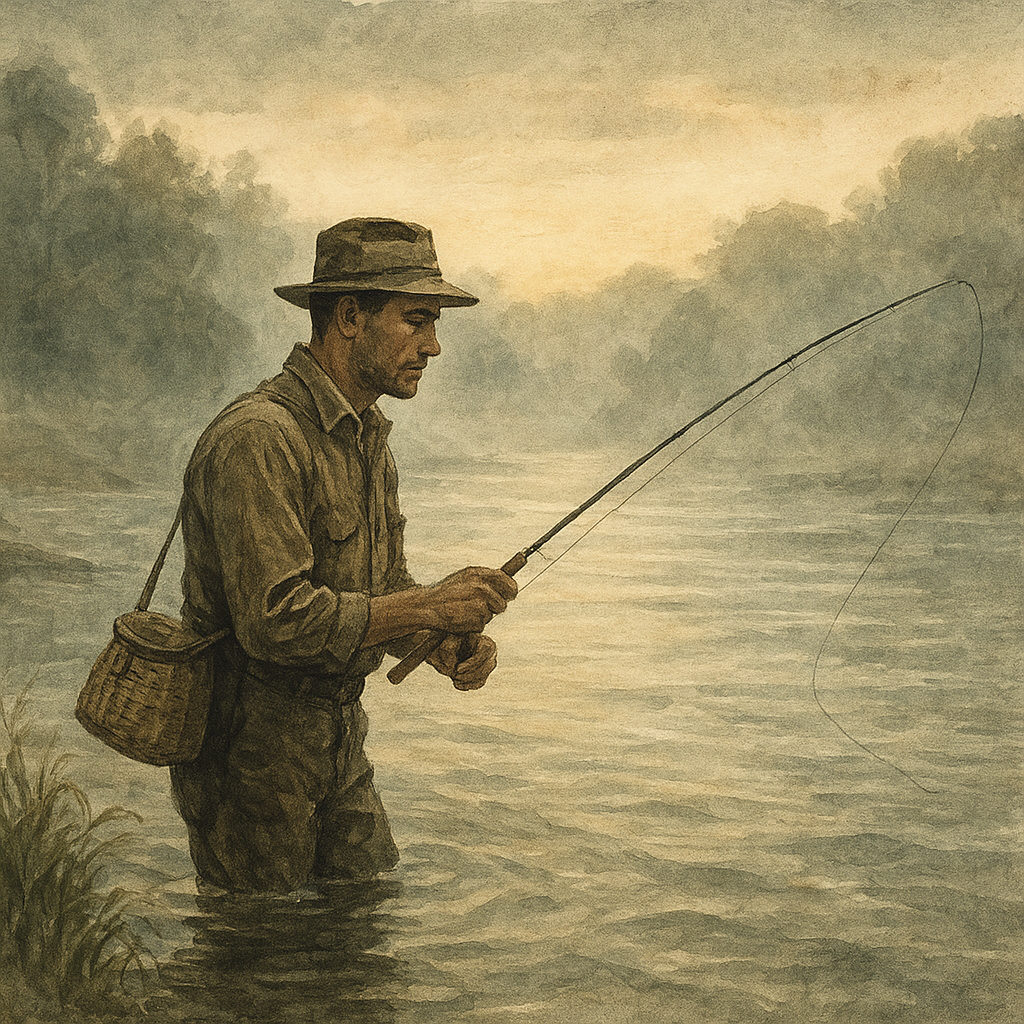
Kennebec River Crossing: Striped Bass and Shad in Augusta
The river woke with a slow hum. I moved through dawns and puddles of fog, leaving the Battenkill’s sigh behind. Three hours north, and the Kennebec welcomed me in Augusta with a pale light and a clean, stubborn current.
Spring runs set the pace. The water was clear enough to show the river’s bones, the gravel bars and the pale ghost of weed beds. Striped bass moved with the tide in these freshwater reaches, and shad slid through like stepping through a doorway you don’t notice until you’re in it. The river is not loud here. It is patient. You hear it in your own breath, your line, and the bite that comes when it comes.
I started with a simple cast, a tight loop and a practiced mend. The lures were honest and plain, a rhythm of hope. The bass took first in a flash of silver and boil, then settled into the river’s firm grumble. I felt the fish’s push and the water’s resistance, the world narrowing to reel, rod, and the next steady strip. It’s not glory here, but a clean, honest exchange—what you give the river, it returns in a pull that steadies your hands and tightens your spine.
Shad came like a whispered warning, darting in the current with a jaw of pale teeth and a will you can feel in the rod tip. They moved in schools through the shallows where the river’s edge softens to sand. I touched the surface twice and adjusted, listening to the whisper of line sliding through guides. The sun skimmed the treetops, and for a moment the town of Augusta seemed far away, a memory slipping into the mist.
The Kennebec has a way of teaching you restraint. You chase the bite, but you stay with the water. Your feet find the rhythm of clear afternoons, your shoulders learn to wait. When I rolled off a second, smaller bass and watched the fish rise to the surface with a quick, surprised flip, I understood why I keep moving: the river gives you something you can’t name and then asks for it back, again and again.
The drive to Moosehead Lake will be long after this, a different light and a different pull, but this stretch of river is a hinge that keeps the day honest. I left the Augusta bank with a pocket full of quiet, a few stories I’ll tell in the next town, and a line that knows where to bend when it should.
Gear Used
- Orvis Clearwater Fly Rod 5wt — reliable grip on a long day
- RIO Gold Fly Line — smooth through the guides
- Lamson Liquid Fly Reel 5+ — teeth of a quiet clock
I learned to read the water by feel, not just sight. What worked was patience, a steady hand, and keeping the rod low. What failed was rushing a cast when the shad showed themselves. The key was listening to the river’s pace and letting my line tell me when to move.
The river forgives only the patient.