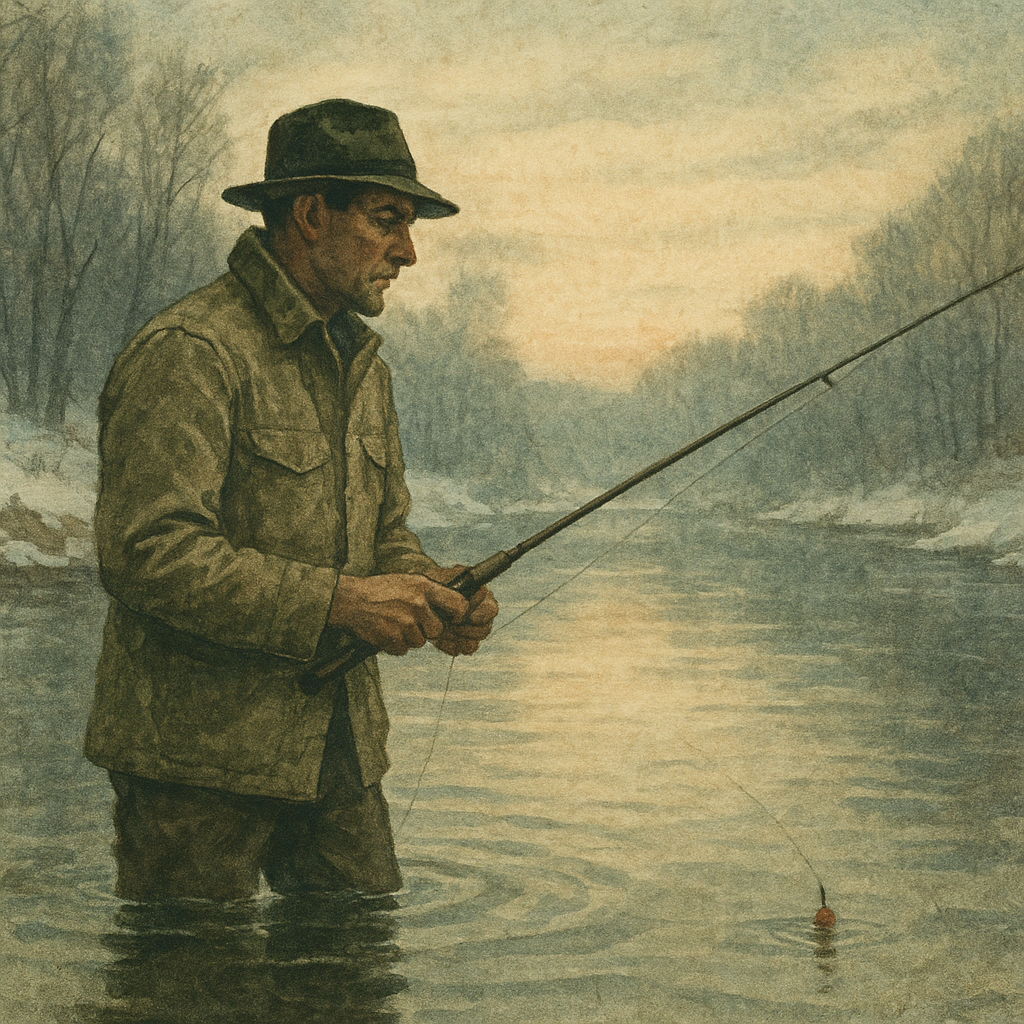
Snow-Lined Tributaries, Dawn, and Yellow Perch
Dawn arrives with a hush. Snow lines the banks. The river wears a pale glare. Breath puffs out in small clouds. The lake side air is clean, cold, and patient. We move slow. The fish do not rush us. They wait as water waits for light to steady on the current. The river is a corridor of seams and shadows. In the stillness, our hands tell the truth about what we are chasing.
We shoulder the day as if it were a weather front held back by a line of trees. The water is glassy for a breath, then a seam opens and shuts. A hush of ice music creaks in the far brush. The thaw is slow here, but it is coming. The boats sit tight. Waders hold the ground, boots sink with a soft sound in the mud. Dawn feels like an old hand at your side, guiding the cast without your asking.
We drift along the seams where the perch stack in their winter posture. The indicators are small, delicate things. A flick of line, a pause in the current, a micro-sip of bait. You can feel the fish listen before you see them. We shape the cast to the seam, a silent hinge turning in the drift. My breath fogs the air, and for a moment I am split between two worlds—the waking day and the water’s patient testimony.
The line slips out. Not in a hurry. Not too tight. A tiny dash of weight. We watch the line ride the seam and drop. The perch rise like gold coins flipped from a pocket, stacked and wary. They do not explode. They come, then fade, then return with a measured patience that belongs to dawn and to cold rivers that remember how to wait.
It is a small, stubborn sport. We learn to read the water in a language older than our gloves. The fish come in quiet, as if heat is a rumor. We shift small indicators along seams. A pause here. A tug there. We become patient with their stubborn hunger, knowing the perch often lie in the heavier current, in the shelter of a boulder, under a branch that tilts the water into a secret pocket.
The morning moves on with a simple arithmetic: cold air, dark water, bright fish. The geometry of line and rod holds steady. We place the drift and the drift holds us. We miss a take, then we remember to ease back, to respect the water’s memory. If the perch stack at the lip of a seam, we learn to wait the moment we feel the tell-tale light pull and then the small, precise set that follows.
Dawn clarifies. The snow along the far bank begins to soften into a pale dust as the sun leans upright. The water brightens, as if it had been listening for a long time and finally decided to answer with a clear, flat gleam. It is a plain drama, without fanfare, but we are grateful for the clarity. The fish, in their quiet patience, remind us to trim our words and keep our hands honest.
Gear Used
- YETI Rambler 20 oz Tumbler — Keeps coffee warm at dawn on cold mornings
- Orvis Clearwater Fly Rod 5wt — Gentle feel in cold, stiff water
- Sage Foundation Fly Rod 6wt — Solid rod, simple lines for wary fish
The river teaches us to keep our gear light and our pace lighter. When something feels right, we do not rush. When something feels wrong, we pull back and listen, not just to the line but to the water itself. The morning is generous, but it is not soft. It asks for discipline, for attention, and for the humility to accept what is offered and what is not.
Until next dawn, we listen.