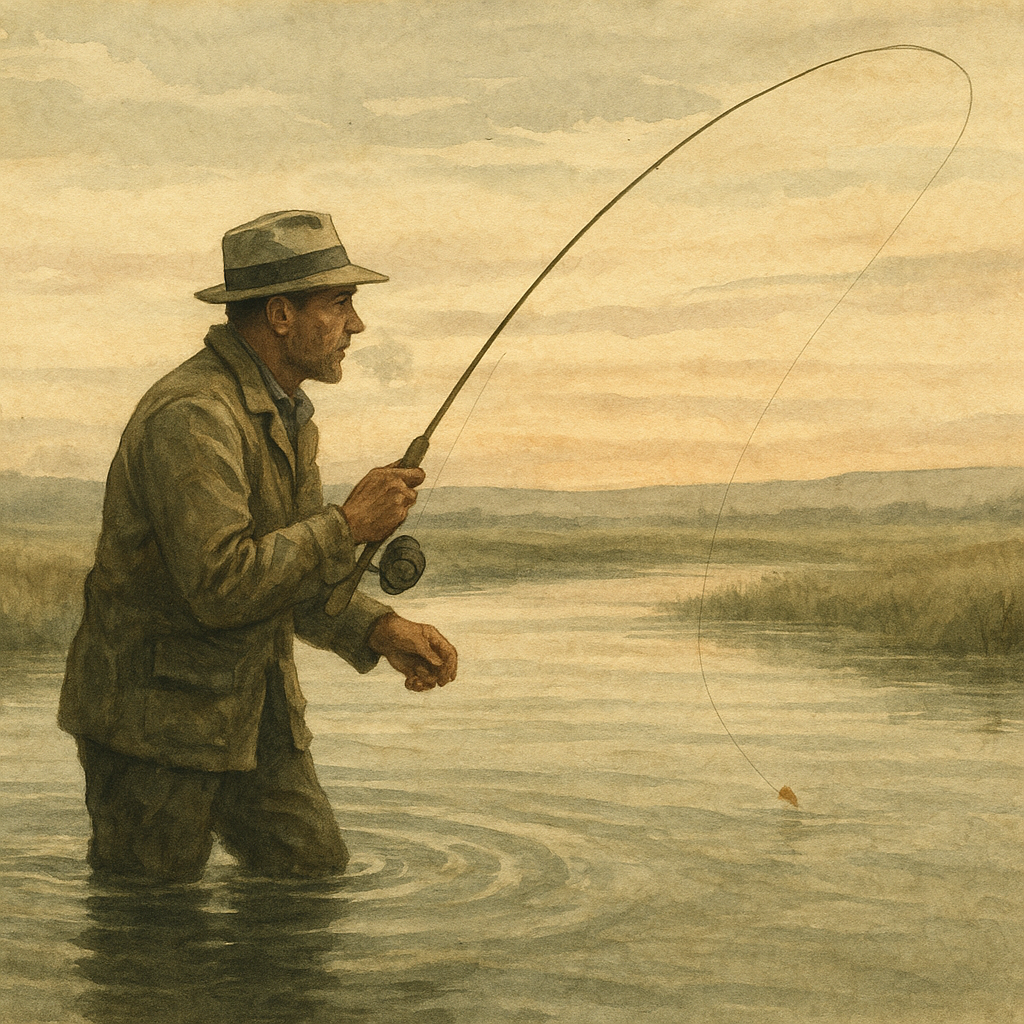
Dawn on the Windward Flats
Dawn arrives with wind already stitching the prairie into sound. The reservoir lies flat as a mirror, but the air has teeth. It blows from the east, clean and cold, and the grass moves in slow, patient waves. I walk the edge where the wind meets the water. It is a sound I have learned to trust and fear in equal measure.
On the flats, the sun climbs a pale line. It makes the bonefish appear or disappear with a blink. They are skittish. They listen for your breath. They watch the line as if it might bite from the air. The water is bright and shallow, a jade sheet with a hint of gold. The wind keeps the surface alive, not loud, just present. It breathes for you, then it forgets you, then it breathes again.
I move with it. I drift small indicators along seams, a ghost of color moving with the current. The indicators ride the current, barely heavy enough to hold a whisper. When the flash of silver comes, it is a moment of attention and then quiet, a pause between two breaths. The fish come with their own weather, fast as a rumor and just as light. A cast lands softly, the line cutting through air with a deliberate hush. The bonefish respond with a quick, practiced flip, then vanish like a rumor in a wind-blown field.
The prairie reservoir does not care for drama. It wants a patient man, a soft hand, a good fly, and a fish that respects the seam as a place to rest, feed, and leave again. The wind is not an opponent; it is a partner that asks for accurate timing. The flats shine with a stubborn brightness, and the fish keep to the seams, where the water narrows and fingers fear to grip. I learn to read the surface like a page that will not stay still, finding small currents that hide the fish and small noises in the water that tell me where to pause.
Breath fogs the air in slow, white letters. It forms a little second mind that helps you keep your temper when the bite does not come for long minutes. The sound of water along the edge makes a cadence, a rhythm that keeps the mind from wandering. In the stillness of this light, there is a kind of honesty. You see your mistakes in the way your line lands, you hear them in the way your feet shift weight, you feel them in the tremor of the rod hand when the line sits on the surface, unyielding.
Sometimes, the wind shifts and the flats darken a shade. Somewhere a bird calls, far off, then returns to silence. The dawn remains, and with it the possibility of one good bonefish. It comes not with a shout but with a quiet push of current, a minute tremor of a seam, a slight uptick in the indicators that you set with careful force. The fish do not surrender easily. They let you think you won and then swim away with a small, almost affectionate defiance. You pack the lesson into the pockets of your vest: patience, precision, respect for water and for wind alike. And you walk back toward the shore with a slow, stubborn gratitude.
Gear Used
- Orvis Clearwater Fly Rod 5wt — dependable, responsive, steady hand on pace
- Shimano Stradic FM Spinning Reel — smooth wind between cast and catch, reliable
- Costa Del Mar Fantail PRO Sunglasses — clarity to read water, sun held at bay
The lesson landed with the final glassy moment: what works, what fails, and how water speaks when you slow down enough to listen. The wind teaches you to be exact; the fish teach you to be patient; the water teaches you to move with certainty and then to wait. Sometimes the most honest answer is to hold your breath, keep your feet quiet, and wait for a seam to tell you where to place your fly.
Until the next dawn.